

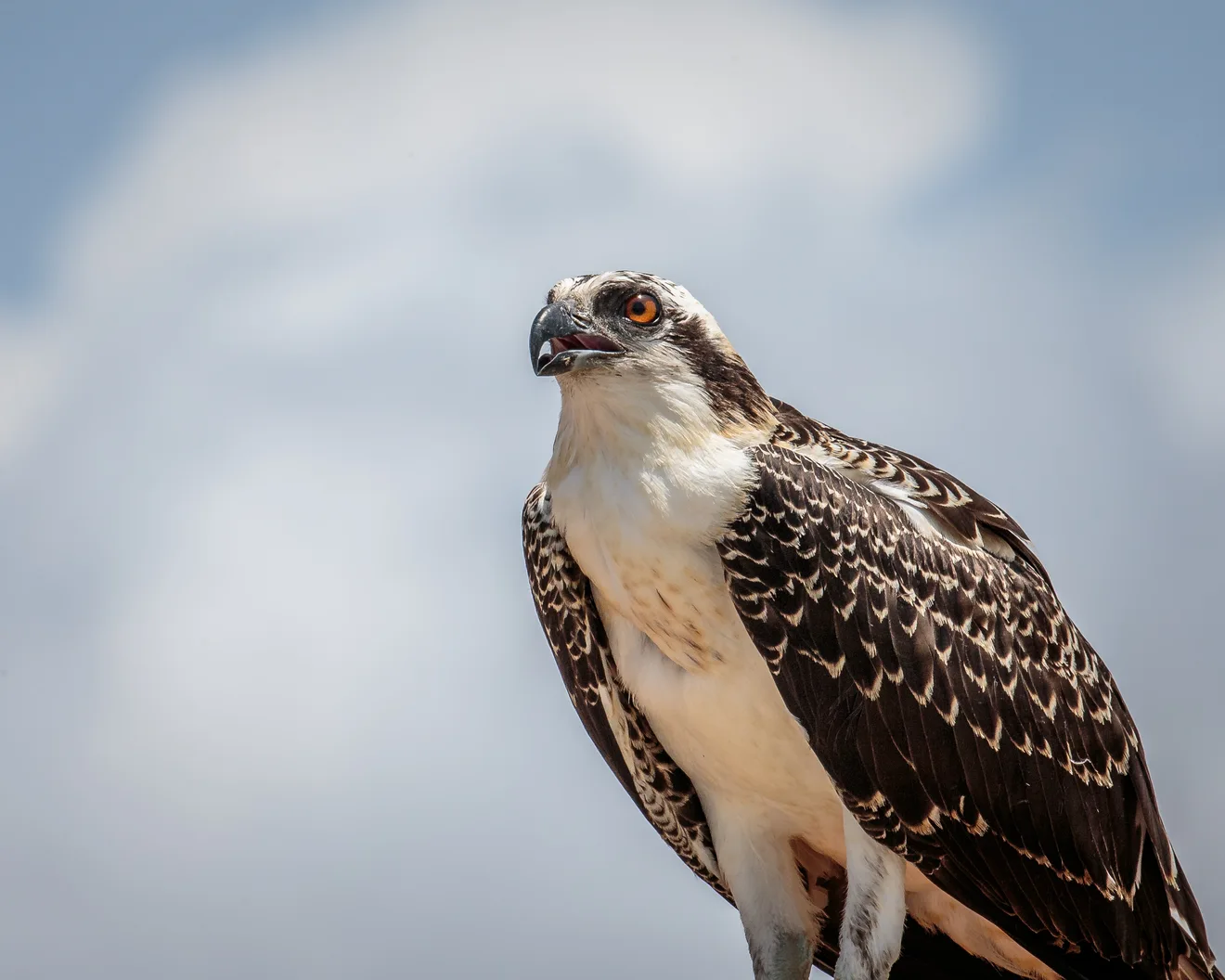
Juvenile Osprey
Pandion haliaetus
Look for pale edges on the dark back and wing feathers and an orange iris. A young Osprey shares the adult’s white head and dark stripe through the eye.
On this page5 sections
How to recognize it
If the bird is perched, look at the folded wings and back first. The broad pale edges on fresh juvenile feathers are often visible even when the eye is in shadow. Young birds can also have a buffy wash around the nape or chest. Worn feathers can make the pattern less obvious.
Compare juvenile and adult
Andy Morffew · CC BY 2.0 · resized

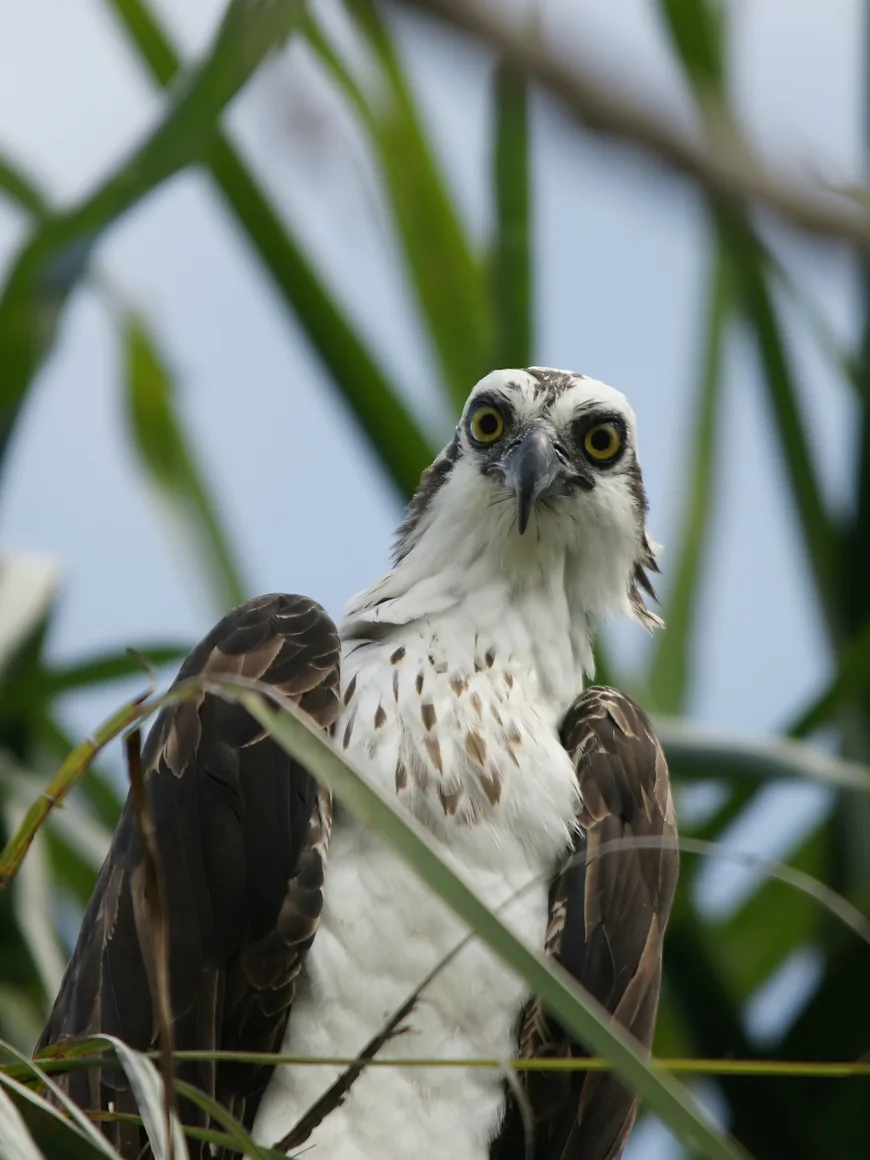
Hans Hillewaert · CC BY-SA 3.0 · resized

Identify it in flight
Find the long wings bent at the wrists, with dark wrist patches against pale underwings. Ospreys often hunt over water. The wing shape and wrist patches help confirm the species, and a clear view of the upperparts is more useful for judging age.
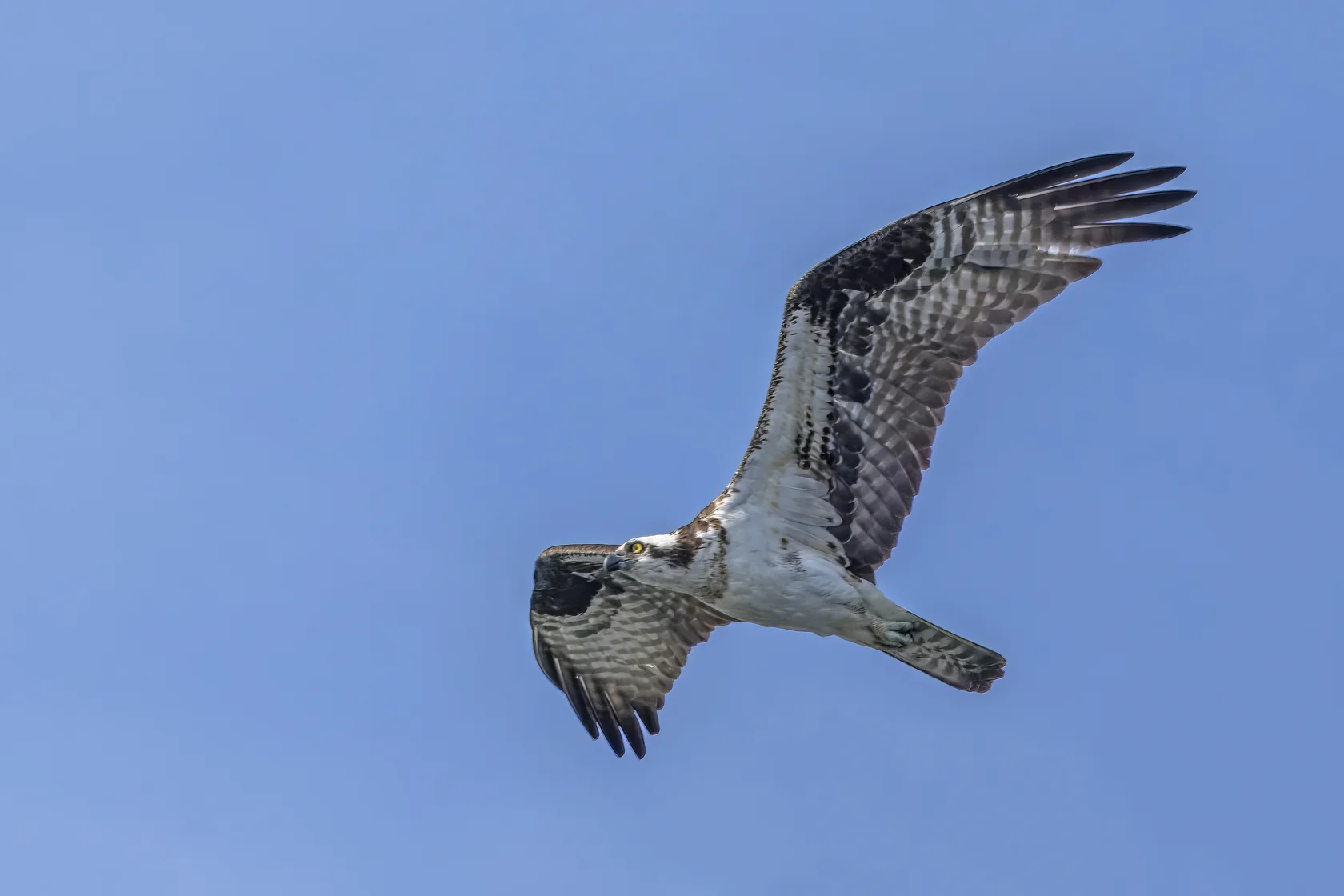
Charles J. Sharp · CC BY-SA 4.0 · resized

Juvenile Osprey or young Bald Eagle?
A first-year Bald Eagle is bulkier, with broad wings and a mostly dark head. Young eagles can have irregular white mottling, while a young Osprey has a more defined white head and dark eye stripe. Check the overall wing shape as well as the plumage when the light is poor.
Field references
For the species’ calls, range, and nesting habits, see the Osprey species guide.
Cornell Lab’s Osprey guide, Cornell Lab’s Bald Eagle guide, and the Connecticut DEEP Osprey fact sheet.
Juvenile Northern Flicker