

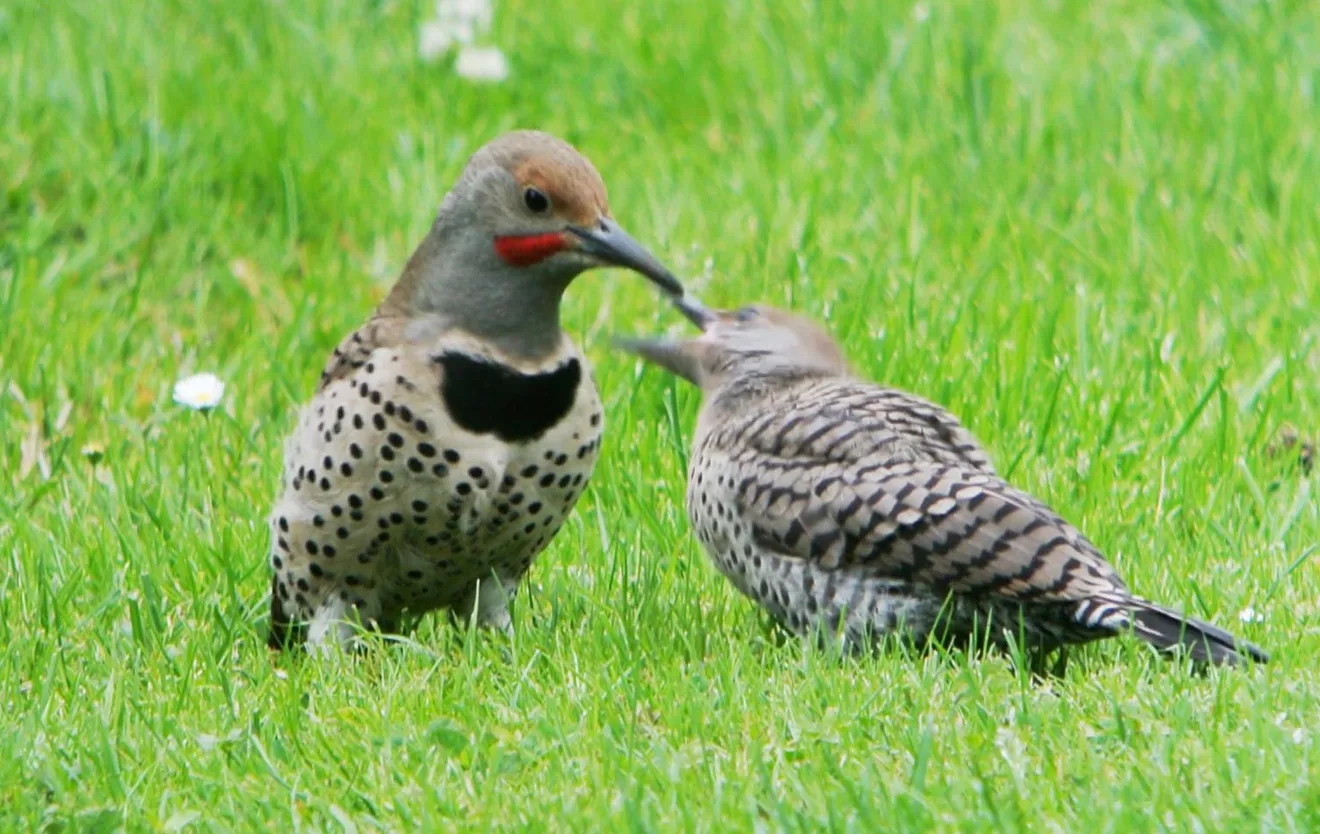
Juvenile Northern Flicker
Colaptes auratus
A young Northern Flicker already has the species’ spotted belly and dark chest crescent. Fresh fledglings often look softer and duller than nearby adults. Watch for the white rump in flight.
On this page5 sections
How to recognize it
Look for a brown back with dark bars, round belly spots, and a dark crescent across the upper breast. Flickers have long bills and are often seen probing for ants on lawns or trails. When one flies away, look for the white rump.
Compare juvenile and adult
Andy Reago & Chrissy McClarren · CC BY 2.0 · cropped and resized

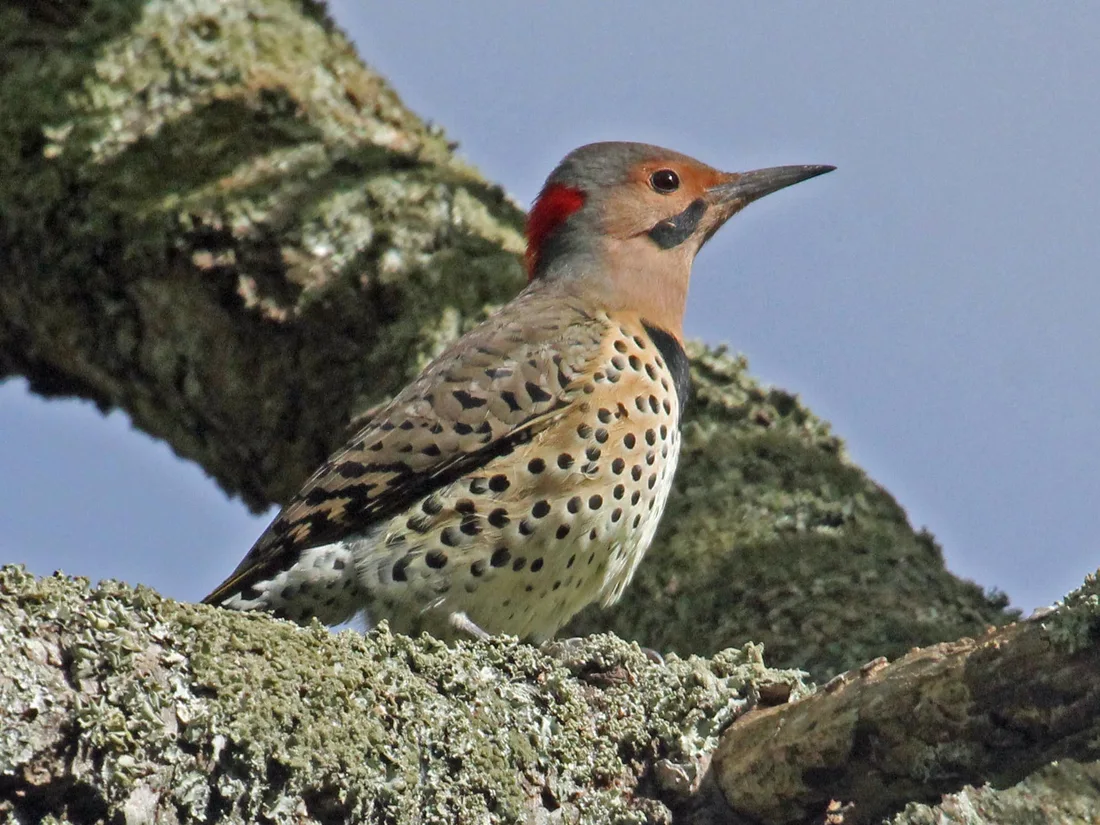
Dick Daniels · CC BY-SA 3.0 · resized

How to tell if it’s a juvenile
A recent fledgling may have fuzzier feather edges and less distinct markings than an adult. An adult feeding it gives you a stronger age clue. Once the bird has molted into more adult-like plumage, it can be difficult to age from a single photograph.
Check your location before interpreting color. Yellow-shafted birds are typical in the east and red-shafted birds in the west. The forms interbreed where their ranges meet, so head and wing color can vary.
Rule out the look-alikes
- Juvenile Red-bellied Woodpecker. Look for an evenly barred back and a much plainer belly. A flicker’s spots and crescent are the better clues.
- European Starling. A young starling is mostly plain brown, with a shorter tail and no contrasting white rump.
Field references
See the Northern Flicker species guide for calls, nesting, and seasonal sightings. For more on field marks and aging, see Cornell Lab’s Northern Flicker guide and McGill Bird Observatory’s aging guide.
Juvenile Osprey